Anyone who has lived in Western Washington long enough has met a bee on a flower and a wasp at a picnic. Understanding wasps in Washington state helps you know what belongs in the garden, what is nesting too close to the house, and when to call for help.
This updated guide covers the most common types of wasps in Washington state, how Washington wasps differ from bees, what nests look like, and when professional wasp nest removal makes sense. Sunrise Pest and Turf Management has served the Puget Sound since 1978.
Types of Wasps in Washington State
The insects homeowners report most often include yellowjackets, paper wasps, bald-faced hornets, and mud daubers. Honey bees and bumble bees show up too, but they are pollinators and usually need a different response than a nest of scavenging wasps.
Activity rises as days warm and typically peaks from midsummer into early fall, when colonies are largest and more defensive around food and nest sites.
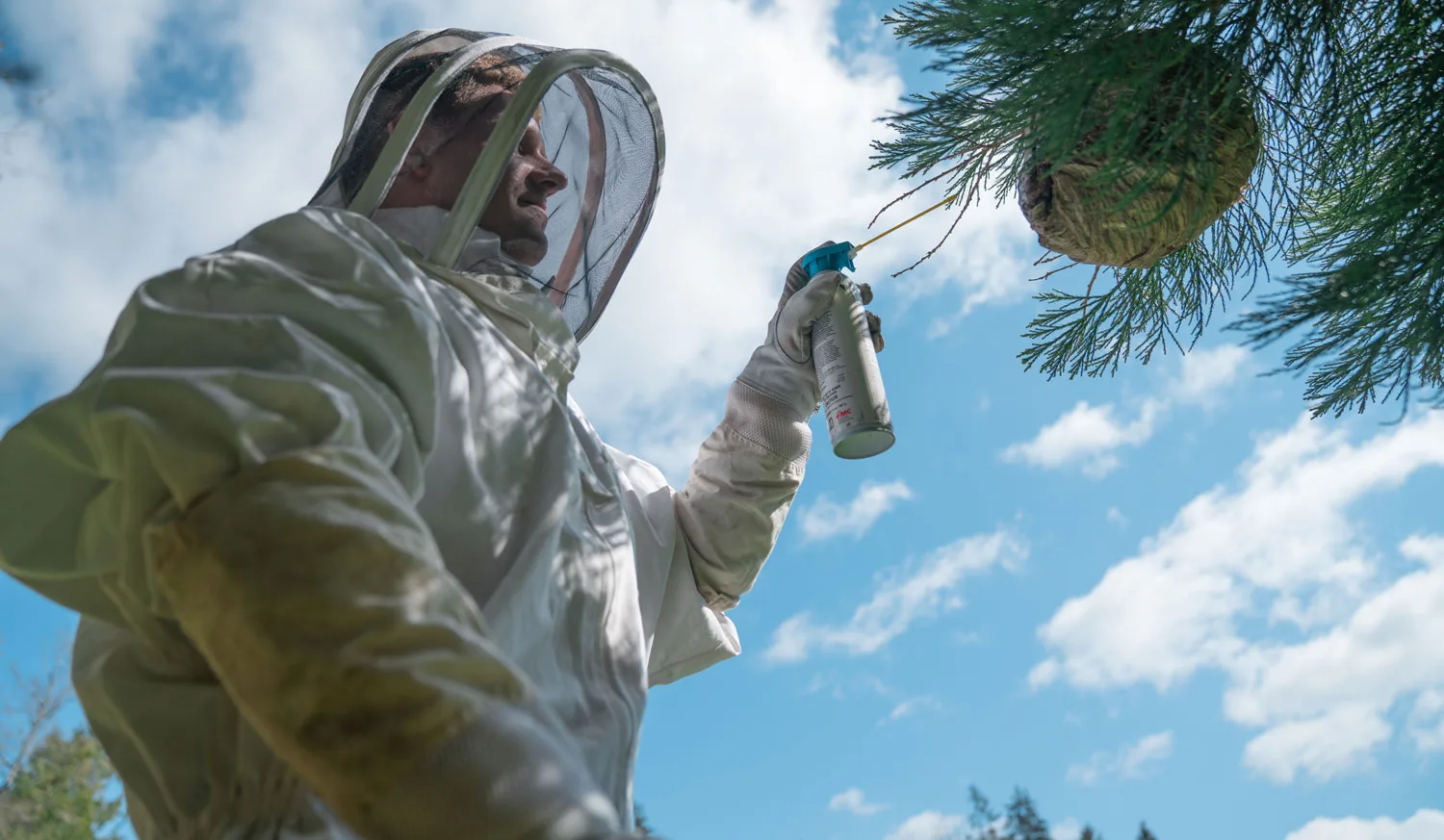
Yellowjackets
Yellowjackets are among the most common Washington wasps around homes. They have shiny yellow and black bands and a relatively smooth body. Colonies can grow large by late summer.
Some nests hang in shrubs or under eaves. Others sit underground or in voids, with a small hole in soil, under a deck, or beside a retaining wall. Yellowjackets hunt other insects and also scavenge sweets and proteins, which is why they show up at trash cans, compost bins, and outdoor meals.
If you see steady traffic into one spot, keep people and pets back and consider professional service rather than poking the nest yourself.
Paper Wasps
Paper wasps build open, umbrella-shaped comb nests under eaves, deck rails, and porch ceilings. They are usually less aggressive than yellowjackets unless the nest is disturbed. Many have reddish brown markings, so people sometimes search for a “red wasp” when describing them.
A single nest high on an unused shed may not need treatment. A nest above a front door or child’s play space is a different story. When removal is warranted, our wasp and hornet control team treats the nest directly and explains what to expect over the next week.
Bald-Faced Hornets: The Black Wasp in Washington
When people search for a black wasp Washington homeowners usually mean the bald-faced hornet. These are large black and white wasps that build enclosed aerial nests that can reach football size in trees, shrubs, or on structures. Colonies defend the nest vigorously when they sense vibration or pressure nearby.
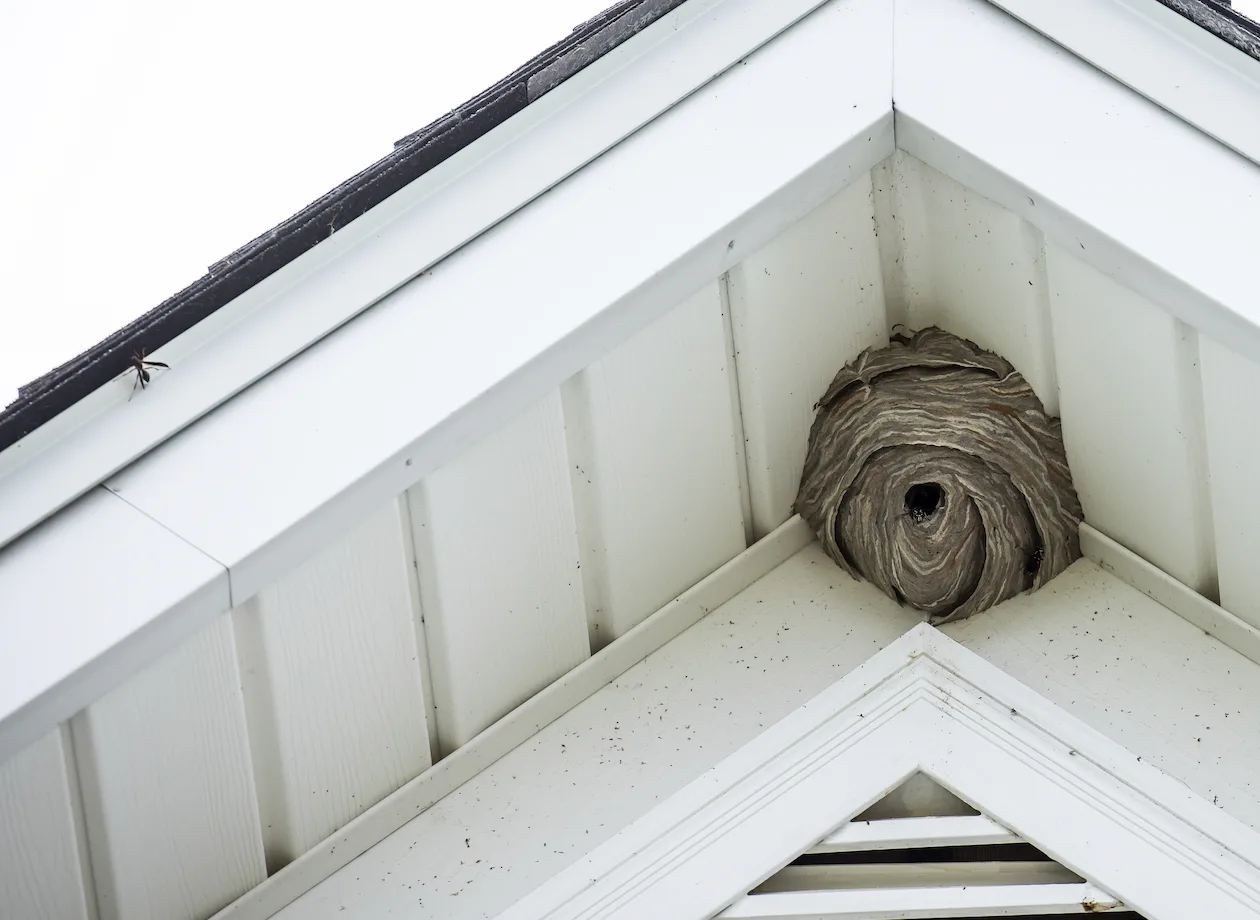
Do not assume a large nest is inactive just because it looks quiet on a cool morning. If you spot a new nest near a walkway or driveway in Bremerton, Silverdale, Poulsbo, or nearby communities, schedule an inspection before the colony peaks.
Mud Daubers
Mud daubers are solitary wasps that build mud tubes or nests on walls, eaves, and protected surfaces. They hunt spiders and are generally less aggressive than social yellowjackets or hornets. A mud nest is often more of a nuisance than an emergency, but it can still mark areas where insects are active around the structure.
Ground Nests
Ground-nesting yellowjackets are common in Washington lawns, garden edges, and bare soil patches. Entry holes can look like small burrows. Multiple holes may mean more than one colony or satellite activity.
Pets and barefoot kids are at higher risk near active holes. Mark the area, avoid mowing directly over the hole until treatment, and call for nest removal if the nest sits where you cannot avoid it all season.
Bees vs. Wasps: How to Tell Them Apart
Honey bees and bumble bees are usually rounder and hairier. They focus on flowers and are important pollinators. Most wasps have a narrower waist and smoother look. Many hunt insects or scavenge human food.
| Cue | Bees | Wasps |
|---|---|---|
| Body | Rounder, hairier | Smoother, thinner waist |
| Behavior | Mostly on flowers | Often near trash, eaves, or soil holes |
| Nest | Hives or fuzzy colonies | Paper combs, enclosed aerial nests, or ground holes |
| Risk near doors | Usually lower unless hive is close | Higher when defending a nest on a daily path |
If you are unsure what you photographed, note size, color, nest shape, and location. That helps our office route your call before a technician arrives.
Pictures of Wasps in Washington State: What to Look For
Clear photos help more than a vague description. Capture:
- Overall color pattern (yellow and black vs black and white)
- Nest shape if visible (open comb, gray football, soil hole)
- Where activity concentrates (eave, deck rail, lawn hole, trash area)
Bald-faced hornets look distinctly black and white. Yellowjackets show bright yellow bands. Paper wasp nests look like an open umbrella comb without a full paper shell.
Why Activity Spikes Around Washington Homes
Mild marine climate seasons give bees and wasps a long active window. Uncovered trash, ripe fruit on the ground, outdoor pet food, and sugary drinks attract scavenging wasps. Nests tucked under siding or in attics can warm up early and stay active longer than many people expect.
Homes near greenbelts in Port Townsend, Sequim, Bainbridge Island, Olympia, or Aberdeen often see more flying insects simply because habitat is close. That does not mean every insect needs treatment. It does mean nests on daily paths deserve a plan.
Prevention Tips
- Seal gaps around doors, windows, and utility lines
- Keep trash lids tight and clean sticky spills outdoors
- Screen vents where practical
- Watch eaves and deck undersides in late spring for early nests
- Knock down a brand-new starter nest only if it is tiny, inactive, and easy to reach safely
Early prevention is easier than treating a large late-season colony. For flight-path clues that point back to a nest, see our guide on reading wasp and hornet flight paths around eaves.
When to Call a Professional
Call for professional wasp nest removal when any of these apply:
- The nest is at a front door, porch, grill, or play structure
- You see repeated stings or aggressive defense when people walk nearby
- The nest is inside a wall, attic, or crawl space
- Someone nearby is allergic or you are unsure about ladder safety
DIY sprays often anger a colony without removing the nest. Our technicians apply treatment directly to the nest site and leave it so returning workers contact the product. Most activity slows within about seven to ten days.
Need help now? Call (888) 376-9109 or request service through contact. We serve Kitsap, Jefferson, Clallam, Grays Harbor, and King and Pierce County communities.
Wasp Control from Sunrise Pest and Turf Management
Sunrise Pest and Turf Management provides wasp and hornet treatments for homes and businesses across the Puget Sound. We treat aerial nests, ground nests, and many wall void situations when access is safe. Treated nests include a 30 day warranty so you know what to expect if activity continues.
Many customers pair one-time nest removal with full service pest control for ants, spiders, and rodents on a steady schedule. Learn more on our wasp and hornet control page.
FAQs About Wasps in Washington
What are the most common wasps in Washington state?
Yellowjackets, paper wasps, and bald-faced hornets top the list for homeowners. Mud daubers and some solitary species also appear but usually cause fewer conflicts.
What is the black wasp in Washington?
Most people mean the bald-faced hornet, a large black and white wasp with an enclosed aerial nest. Give nests space and call for help when they sit near daily foot traffic.
What types of wasps are in Washington state?
Social species you are most likely to notice are yellowjackets, paper wasps, and bald-faced hornets. Solitary mud daubers also nest on walls and eaves.
What is the difference between bees and wasps?
Bees are generally hairier and focused on pollen. Wasps often have a slimmer waist and may hunt insects or scavenge sweets. Nest shape and location help tell them apart.
Are yellowjackets common in Washington State?
Yes. They are among the most frequently reported wasps here, especially from late summer into fall when colonies are large.
Do wasps nest in the ground in Washington?
Yes. Ground nests are often yellowjackets with small soil openings near gardens, paths, and retaining walls.
When should I call a pest control company for a wasp nest?
Call when the nest is near people, pets, or entry doors, when activity is daily, or when the nest is in a wall or attic. Professional removal is safer than disturbing a large colony yourself.
Ready for help with bees and wasps on your property? Schedule wasp and hornet control with Sunrise or call (888) 376-9109 today.