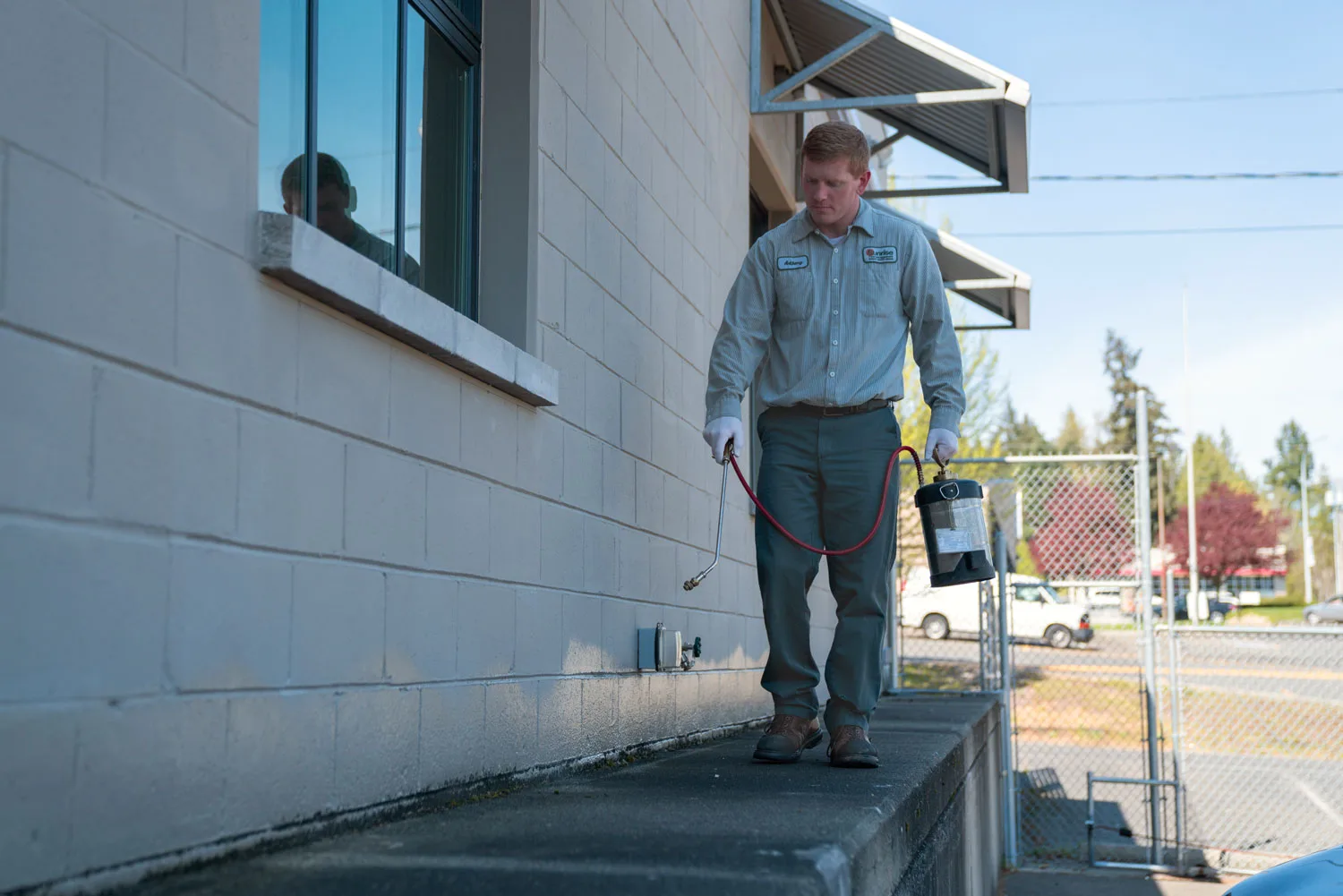
An HOA property can generate several outdoor service calls that look unrelated. Residents report ants near one building. Moles appear in a common lawn. A turf area near the entrance thins out. Rodent activity is noticed around a shared waste area. Another part of the property needs aeration or weed control. If every issue is handled as a separate emergency, the manager can end up coordinating several companies that rarely share notes about the same site. We provide both commercial pest control and commercial lawn care for HOA communities and other multi-building properties. The broader commercial services overview explains how those programs fit together. The value is not that lawn fertilizer treats rodents or that a pest technician should aerate turf. It is that the property can have one organized service relationship covering two parts of the grounds that regularly affect each other.
Start with a property map
An HOA should define the service area before discussing the treatment schedule. Which lawns are common property? Which beds belong to individual homeowners? Which building exteriors are included? Are dumpster areas, clubhouses, mail stations, parking islands, and stormwater areas part of the account? Where are residents allowed to submit service requests? We serve both commercial lawns and building perimeters, but we still need a clear scope. A map prevents confusion when one resident assumes the association covers a private backyard while another believes every visible lawn belongs to the HOA. It also gives technicians a consistent way to record where activity was observed.
Resident reports need one intake process
An HOA can receive duplicate reports from several homeowners about the same issue. One resident sees ants.
Another reports "termites."
A third says insects are entering through the same wall. Without a central process, the property manager may create several work orders that all describe one area differently. The board or management company should decide where residents send pest and lawn concerns. The manager can then combine dates, photographs, unit or building numbers, and locations before contacting us. That does not mean the manager has to diagnose the problem. It means the technician arrives with organized information instead of six disconnected emails.
Common lawns can reveal pest activity too
We offer mole control, lawn-insect treatment, grub control, disease service, fertilization, aeration, and overseeding. These services belong to the turf side of the account, but some of the observations may affect the pest conversation. Mounds and tunnels in a common lawn are not handled through ordinary fertilization. Turf damage connected with insects needs a different response from thin grass caused by compaction. Rodent activity near landscaping or shared structures may need inspection beyond the lawn itself under rodent control. Keeping the work under one company can reduce the chance that one technician's observation disappears because it technically belongs to another vendor.
Perimeter service can be planned building by building
Our full-service pest program uses recurring treatments around property perimeters to help manage common interior and exterior pest pressure. Dedicated perimeter pest control can also be scoped for shared exteriors. On an HOA property, that perimeter may involve several buildings. The service plan should identify whether every structure is included or whether treatment is concentrated around common buildings and documented problem areas. Access also matters. Does the technician need entry to locked utility rooms? Are there crawl spaces maintained by the association? Who opens gates? Should residents receive notice before exterior work? Those details turn a general commercial pest agreement into an actual operating plan.
Commercial lawn work should follow how common areas are used
An entrance lawn has a different role from a lightly used strip behind a building. A play area may experience more traffic. A shaded courtyard may have different turf conditions from an open roadside section. We offer fertilization, weed control, aeration, overseeding, disease control, insect service, grub treatment, and lime applications for Western Washington lawns. The HOA does not necessarily need every service on every square foot. A property assessment can separate high-visibility turf, compacted common areas, and sections where a different level of care makes sense. That is better than treating the entire community as one large, uniform lawn.
The board still needs clear reporting
One account only helps if the service records are understandable. The property manager should know which buildings were treated, which turf areas received service, what technicians observed, and whether follow-up is recommended. We highlight our licensed local technicians and dedicated quality-control function as part of how we manage service execution. Environmental and product questions can be reviewed alongside the environmental safety page. For an HOA, that reporting can support board discussions and reduce repeated questions from residents. The report should not become a technical document nobody reads. It should give management enough information to explain what happened and what comes next.
One account should create coordination, not a vague all-inclusive promise
An HOA pest-and-lawn agreement still needs boundaries. Termite treatment may be separate from ordinary perimeter service. Rodent exclusion may require its own inspection and quote. Aeration and overseeding may be seasonal additions rather than parts of every lawn visit. We have a broad service menu, which is useful only when the board understands which items are part of the normal program and which are requested separately. Browse related posts on the blog, or start from the Sunrise homepage. We have served Western Washington since 1978 from our Bremerton headquarters. We work with residential, commercial, industrial, retail, and HOA properties across the region. HOA managers can call (888) 376-9109 or use the contact page and begin with a map, the property responsibilities, and the service issues currently being reported.