A mole-damaged lawn can look as though the entire property moved overnight. Raised ridges cross the grass. Soil mounds appear near a walkway. The homeowner pushes one tunnel down and finds it raised again the following morning.
Sunrise Pest & Turf Management currently publishes two approaches on our mole control page. Our technicians can use bait made to resemble an earthworm, which is a common mole food source, or granular treatment intended to discourage mole activity in the treated lawn. We provide these treatments through an ongoing monthly service. Neither method begins with spreading material blindly across every part of the property. The technician needs to understand where the activity is current.
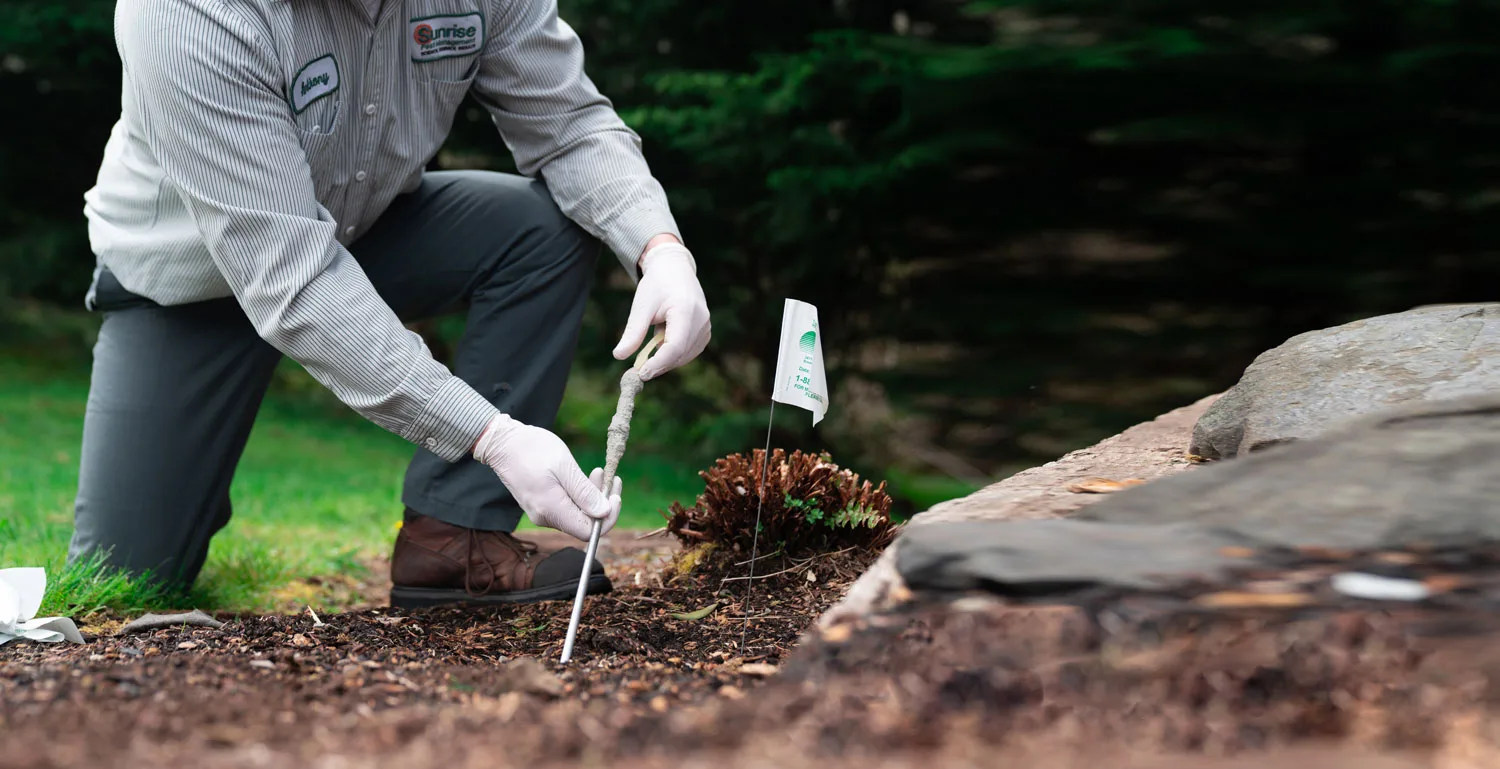
Mark fresh activity before the visit
An old tunnel can remain visible after the mole has moved elsewhere. Several days before the appointment, photograph all visible ridges and mounds, flatten a few selected ridges gently, mark the location, check the following day, note which sections rise again, leave active areas undisturbed afterward, keep pets and children away from marked locations, and show the map to the technician. Do not collapse every tunnel immediately before service. The repeated activity helps us identify where the animal is currently moving.
.webp)
Bait is placed around active areas
Our bait treatment mimics the earthworm food source moles seek underground. The technician should decide where and how it is placed. Report the active tunnel, recent mound, pet area, children's area, vegetable garden, irrigation, utility location, neighboring activity, previous bait, and other products applied. Do not move professional bait or add retail bait into the same area without speaking with us. The service record should identify the treated portions of the lawn.
.webp)
Granular treatment has a different purpose
Our second published approach uses granular material intended to deter moles from treated areas. Ask which area receives the granules, why that method fits this property, whether the lawn needs watering afterward, what pet or child instructions apply, how long before results are reviewed, whether another monthly application is planned, what you should photograph, and whether mowing should be delayed. Follow the instructions given for the actual product. Do not assume that bait and granular treatment have identical preparation or post-service requirements.
Mole service is not grub treatment
Moles may eat earthworms and other soil organisms. Homeowners often assume that killing lawn grubs will automatically remove the mole problem. We list mole control and lawn insect control as separate services. Our lawn program treats pests such as grubs, crane flies, chinch bugs, and billbugs through services including grub control, while our mole page describes monthly bait or granular work directed at the animal. A lawn can have mole activity without a confirmed grub problem. The lawn-insect treatment should follow identification rather than being added solely because tunnels are present.
The visible lawn damage may need separate repair
Stopping new activity does not flatten every ridge or regrow damaged turf automatically. After mole activity has declined, the lawn may need gentle leveling, soil replacement in selected holes, seed, overseeding, aeration, watering, mowing adjustment, repair of exposed roots, and bed-edge restoration. We provide fertilization, aeration, overseeding, disease control, and insect control under our lawn care services in addition to mole service. The proposal should identify which lawn repair is included and which remains a separate project.
Irrigation can make tunnels harder to read
A leaking sprinkler, saturated lawn, or drainage problem can soften soil and alter the appearance of ridges. Tell us about broken heads, underground leaks, wet areas, drainage work, recent trenching, irrigation installation, heavy rain, new soil, utility repairs, and septic work. The technician needs to separate animal activity from soil disturbed by another project.
Monthly service is built around changing activity
We return monthly to apply mole treatments and reduce ongoing property activity. Each report should identify new tunnels, old tunnels, new mounds, treatment method, area treated, homeowner observations, lawn repair, access issues, and follow-up date. Monthly service should not become the same unchanging application across the whole lawn. The latest activity map should guide the visit. Related outdoor pest options also sit under pest control services.
Neighboring property can affect the pattern
A mole does not recognize the property survey. Activity may appear along a shared lawn edge, fence, wooded boundary, roadside, HOA common area, neighboring garden, drainage corridor, or open field. We can treat the customer's approved property. Do not expect service to extend onto neighboring land without permission and an appropriate agreement. When activity repeatedly enters from one boundary, mark that pattern.
Keep a before-and-after map
Use one overhead photograph or drawing. Mark first activity, active tunnels, mounds, bait treatment, granular treatment, monthly follow-up, new activity, lawn restoration, and irrigation. This helps you and our team evaluate movement rather than relying on memory.
Browse more guidance on the blog, or reach us through the contact page. We are located at 3411 11th Street in Bremerton and can be reached at (888) 376-9109.