Fine dust under a baseboard and soft wood in a crawl space can look like the same problem from across the room. They are not. Powderpost beetles and termites both damage wood, but they leave different evidence, prefer different conditions, and call for different Sunrise Pest & Turf Management services. Guessing from a phone photo of "bugs in the wood" wastes a visit.
Sunrise Pest & Turf Management has served Western Washington since 1978 from Bremerton. We publish dedicated pages for powder post beetle control and termite control because the inspection and treatment paths diverge. Start with the evidence on your property, then match the service.
What powderpost beetle damage usually looks like
Powderpost beetles leave tiny round exit holes and a fine, talc-like powder called frass. The dust often collects in small piles under furniture, flooring, or stored hardwood. Adults exit through those holes. The active story is often in unfinished or poorly sealed hardwood, bamboo, and some hardwood flooring or furniture. Softwood framing is a less common powderpost target than people assume when they see any hole in wood.
Brush a little frass onto a dark card and photograph it next to the hole. Note whether the dust returns after you clean. Recurring powder under the same board is more useful than a single old stain on a joist.
What termite evidence looks like instead
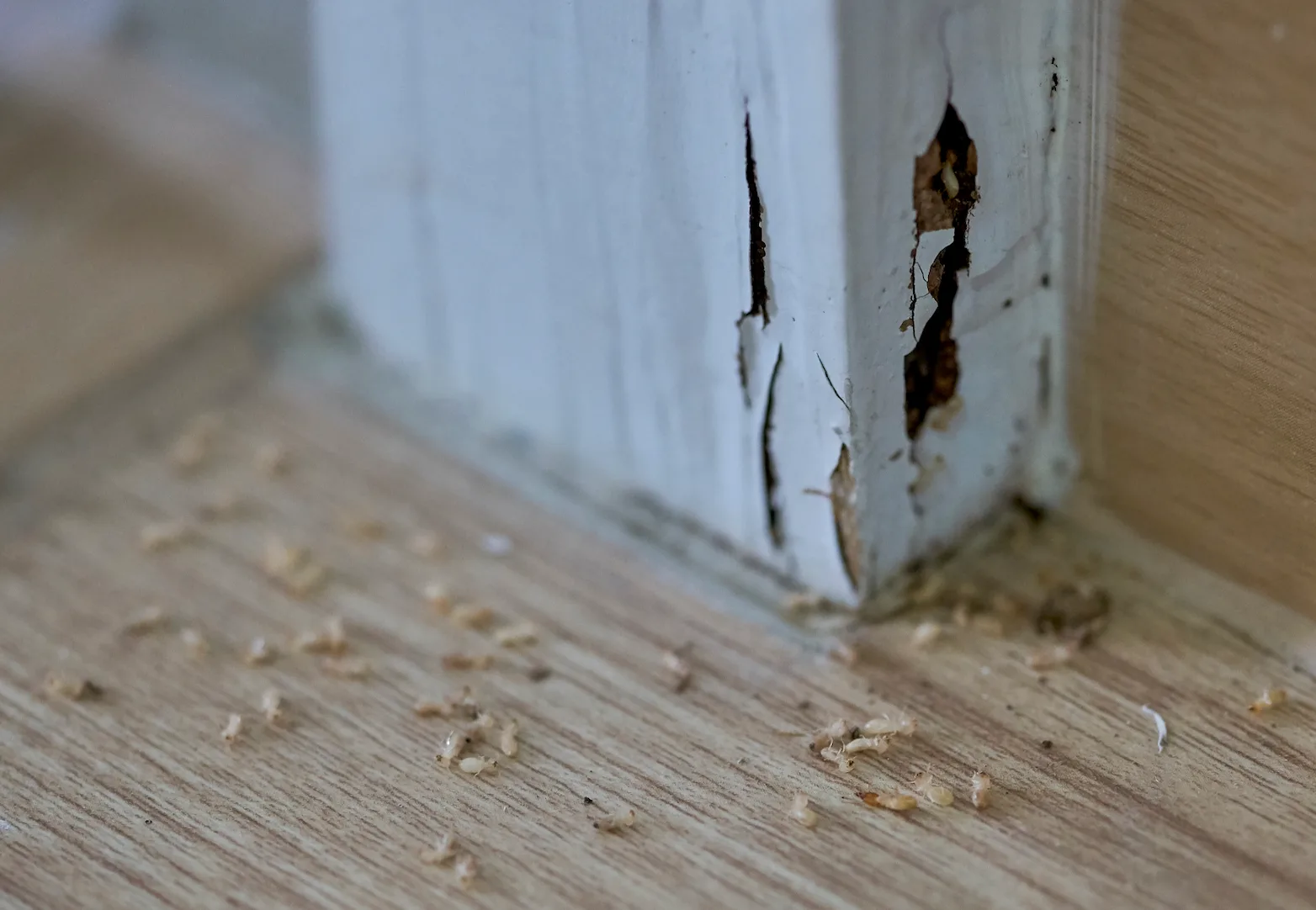
Subterranean and dampwood pressure in Western Washington more often shows as hollowed or layered wood, shelter tubes on foundations, and soft spots when you press a screwdriver into framing. The damage can run inside a board while the surface still looks intact. You may see winged swarmers in spring, discarded wings on window sills, or mud tubes along concrete. That is a different pattern than pinholes with flour-like dust.
Moisture matters. Damp crawl spaces, leaking pipes, and wood in contact with soil create conditions termites use. A dry finished cabinet with fresh powder under one leg points away from a classic subterranean tube story and toward a beetle or other wood insect check.
Do not treat "wood damage" as one ticket
Homeowners often call after remodeling dust looks like frass, or after a contractor mentions "termites" while pointing at old beetle holes. Ask for a clear description: powder and pinholes, hollow galleries, tubes, wings, or live insects. Our pest control services menu keeps wood destroying insects in distinct lanes so the technician arrives with the right inspection focus.
Carpenter ants are another look-alike. They excavate galleries and push out coarser frass with wood chips, and they often nest in moist wood. If the debris looks shredded rather than talc-fine, say so in the notes. Related outdoor and structure pests also sit under the same service umbrella when entry points and moisture overlap.
What to photograph before we arrive
Take a wide shot of the room or crawl space, a close shot of holes or tubes, and a shot of any dust or wings with a coin for scale. Note the wood type if you know it, recent water leaks, and whether the piece is furniture, flooring, or structural framing. Mark whether pets and kids use the room so we can plan access.
Do not apply random retail borate or aerosol into every hole before the inspection. You can hide the evidence the technician needs and still miss the colony or the active beetle generation.
How service paths differ after identification
Powderpost work focuses on the infested wood, moisture correction where relevant, and targeted treatment of the affected material. Termite work follows the species and the site, including soil and wood relationships, moisture sources, and monitoring where appropriate. Those are not interchangeable weekend projects. The proposal should name which insect was confirmed and which area was treated.
If lawn moisture or landscape grade is feeding a damp crawl space, that note belongs in the property file even when the immediate ticket is wood pests. Our lawn care services and drainage conversations sometimes sit beside pest work when wet soil against the foundation keeps returning.
Structural wood versus furniture and trim
Tell us whether the evidence sits in framing, subfloor, crawl space posts, hardwood flooring, or a furniture piece brought into the home. Furniture and decorative hardwood can carry powderpost activity that never touched the structure. Structural members with tubes or hollow galleries deserve a different urgency and a different inspection path. Mixing those categories in one sentence slows the first visit.
Keep a simple wood pest record
Write the date, location, evidence type, photos, and any prior treatment. When a second board shows powder six months later, that history prevents starting from zero. Browse more guidance on the blog, or reach us through the contact page. We are located at 3411 11th Street in Bremerton and can be reached at (888) 376-9109.
Powderpost beetles and termites both deserve a serious look at wood. They do not deserve the same assumption. Separate the dust from the galleries, then call with the evidence in hand.