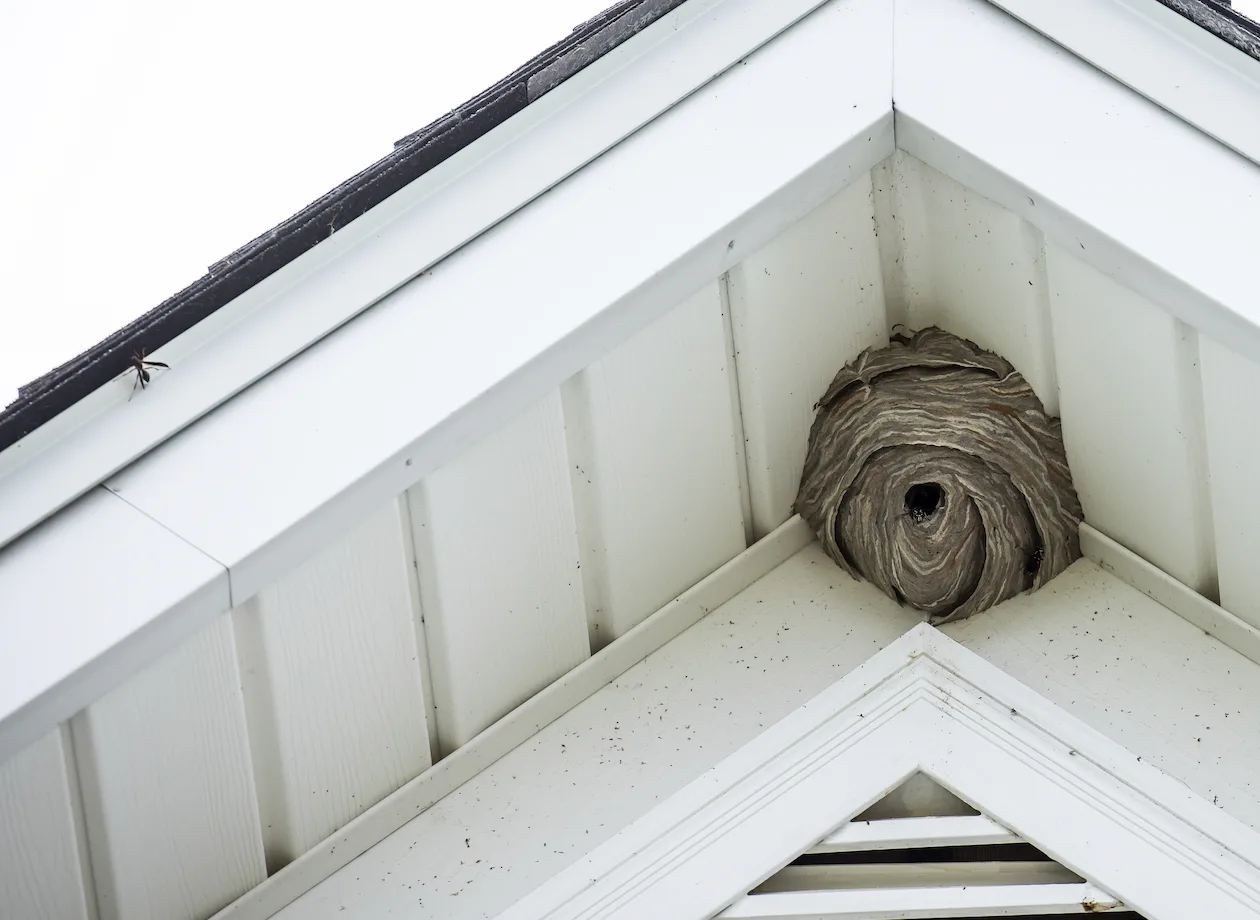
By midsummer, the paper wasps and hornets that started as a single overwintered queen in spring have grown into working colonies. That growth is why the yard suddenly feels busier around the eaves, the soffits, and the shed roof, even though nothing about your outdoor habits changed. The good news is that a busy colony is also a readable one. Steady traffic to and from one point traces a flight path, and a flight path leads to a nest. Reading that line beats swatting foragers at the table one at a time. Sunrise Pest and Turf Management has served Western Washington since 1978. We maintain an A plus rating with the Better Business Bureau and stay current through the Washington State Pest Management Association. You can learn more about the crew on our who we are page. This story is about reading wasp and hornet activity so you can decide what actually needs attention.
Why flight paths read clearly by midsummer
A colony at peak size sends many foragers out and back along consistent routes. Stand well clear of the eaves at a calm time of day and watch where the steady stream converges. Insects leaving in loose directions to hunt or gather are foragers spreading across the yard. Insects returning to the same soffit corner, gable vent, or shrub over and over are showing you the nest location. One patient look from a distance teaches more than a dozen reactive swats near the table. Mark the convergence point with a photo rather than a closer approach. A nest tucked behind a gable vent or inside a wall void will not be obvious from the yard, but the return traffic still points to it. Note the time of day the flights peak so a later inspection can match your observation.
Foragers at the table versus the nest overhead
A wasp investigating your drink or the grill is a forager doing its job away from home. Killing that one insect does nothing to the colony sending it. This is the core reason patio complaints and nest pressure are two different conversations. If flying insects only visit the food and then leave, sanitation and cover habits carry most of the load. If a steady flight line runs between a nest and your seating area, the nest itself is the story. Sort the mix when several outdoor issues stack together with our outdoor dining symptom quiz, which weighs wasp pressure against ants, lawn rings, and quiet storage corners. That helps decide whether your first call is about a nest or about the food scene at the table.
Telling paper wasps, yellowjackets, and hornets apart
The three common groups behave differently, and behavior reads from a safe distance better than markings. Paper wasps build open, umbrella-shaped combs under eaves and rail undersides, and they tend to be slower and less defensive as they hang near the nest. Yellowjackets often nest in the ground, in wall voids, or under decks, and their traffic disappears into a hole or a gap rather than an open comb. Bald-faced hornets build the large gray paper envelope you notice hanging in a tree, a shrub, or a corner of the house. Where the flight line ends tells you a lot. Traffic vanishing into a ground hole or a siding gap suggests yellowjackets. A visible gray football shape means bald-faced hornets. An open paper comb tucked under a flat overhang usually means paper wasps. Photograph the endpoint and the shape so identification does not depend on getting close.
When a nest can stay and when it should go
Not every nest needs to go. Wasps hunt caterpillars and other insects, and a small paper wasp comb high on a back corner that no one passes may be worth leaving alone for the season. The question is traffic. A nest over a doorway, beside a play structure, along a walkway, or near where people gather is a different matter because the flight path crosses where people live outdoors. Give any nest distance while you decide. Do not seal a wall void entry that wasps are using, since blocked insects can push further inside. When a nest sits in a spot that shares space with daily traffic, professional wasp and hornet control handles it more cleanly than repeated retail sprays that scatter foragers without reaching the colony.
Habits that lower wasp interest around outdoor living
Foraging pressure at the table responds to simple habits. Keep trash and recycling lids closed, rinse sweet residue from cans and cups, and cover food between servings. Lift fallen fruit under trees and keep pet bowls off the patio once meals end. Late summer shifts wasp appetite toward sweets, so open soda and juice draw more attention in August than they did in June. These habits reduce foragers, not nests. Pair them with a perimeter read when mixed flyers and crawlers share the same corners, using perimeter pest control to keep eaves and entries less inviting. If porch lights and eave corners also collect spiders rebuilding webs, our piece on spider web rebuild at porch lights covers that overlap.
When professional wasp and hornet work fits
Professional work fits when a nest sits in wall voids or the ground, when the flight path crosses a doorway or play area, or when several nests share one property. Explore pest control services when wasps, ants, and other summer pressure fire together and should share one plan. We serve communities across the region listed on our service areas page, including the south Sound lots covered in our Olympia area storm splash guide.
What to send before routes tighten
Use contact or call (888) 376-9109 with photos of the endpoint where flights converge, the nest shape if you can see it from a distance, and a note on the time of day traffic peaks. Mention whether the flight line crosses a door, a walkway, or a play area. Information here supports your decisions. It does not replace a licensed inspection when a nest location or a health concern is uncertain.
One habit to try at dusk
On a calm evening, stand back from the busiest eave and watch one full minute of traffic without swatting anything. Follow the returning insects, not the leaving ones, and mark where the line ends with a photo. That single minute usually tells you whether you are dealing with a few foragers at the food or a working colony overhead, and it turns a vague worry about wasps into a location you can point to when you call.