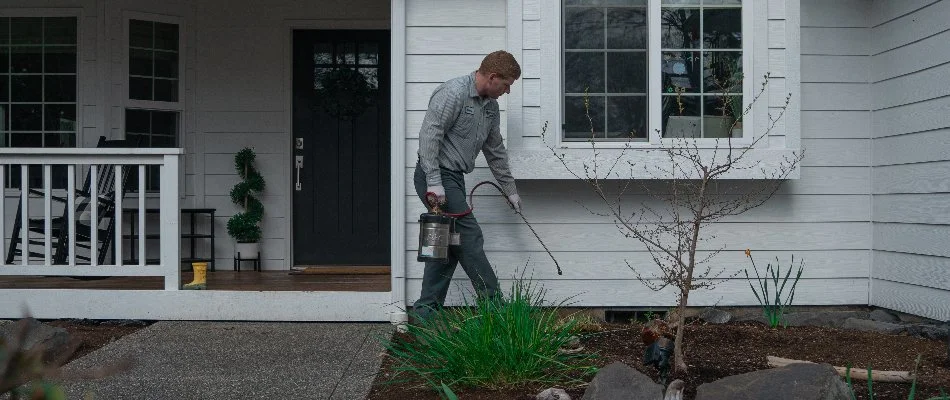
Late March around Bremerton, Tacoma, and the Eastside is rarely dramatic on a thermometer, yet everything underfoot begins to change. Soil inches upward in temperature long before afternoons feel like summer. Cool-season turf breaks dormancy and starts pulling nitrogen again, while ants, spiders, and occasional rodents revisit the same foundation gaps they probed last fall. This overlap is why thoughtful timing matters more than chasing a single calendar holiday.
Why the lawn side feels hungry first
Roots that sat quiet all winter begin exchanging signals with the crown of the plant as soon as soil stays consistently above the low fifties for stretches of the day. Grass may still look beige at a glance, but the factory is turning on. That is when scattershot feeding from a garage bag often creates a flash of top growth without the root support that professional programs target. Our lawn fertilization routes rely on slow-release nutrition and season-specific blends so cool-season lawns get steady support instead of a single surge. If moss, compaction, or puddling dominated the wet months, pairing nutrition with aeration later in the season may make more sense than dumping extra product on sealed-off soil—your technician can read that during a visit.
Pest pressure does not wait for barbecue weather
Exterior ants and spiders respond to lengthening days and moisture in mulch beds, not to your weekend plans. Gaps that felt theoretical in January become highways when the first warm spell hits. Homes near greenbelts in Federal Way or wooded lots on Bainbridge Island often notice scouting ants earlier than dense urban cores, but the pattern is the same: exclusion plus professional perimeter work beats chasing every trail indoors. If you are sealing cracks and still seeing steady indoor traffic, it is time to talk about pest control programs that treat travel routes and harborage instead of only the kitchen counter. Our team draws on decades on the Sound—since 1978—and membership in the Washington State Pest Management Association so methods stay current with Pacific Northwest pressures.
One month, two systems: keep plans realistic
March is not the month to demand perfection from every corner of the property at once. It is the month to align irrigation clocks, confirm downspouts still discharge away from foundations, and decide whether weeds, nutrition, or pests top your list for April visits. Customers who bundle realistic exterior maintenance with scheduled service usually spend less mental energy than those who wait for a crisis. For a wider seasonal picture, our posts on getting your yard ready for spring in the Puget Sound and how often to schedule pest and lawn services in the Pacific Northwest walk through pacing that matches local weather instead of a national checklist.
When to call Sunrise Pest and Turf Management
Reach us at (888) 376-9109 or through contact when you want March observations turned into a written plan—lawn programs, perimeter pest routes, or both. We serve residential and commercial clients across the region with the same A+ Better Business Bureau-backed standards homeowners have expected from us for decades.
Quick March reminders
- Walk the foundation after heavy rain and note new mulch or soil touching siding
- Glance at turf color in morning light; pale yellow often precedes visible weed flush
- Replace bait boxes or traps only after you understand current rodent pressure
- Schedule professional eyes on the lawn before summer heat locks in compaction issues