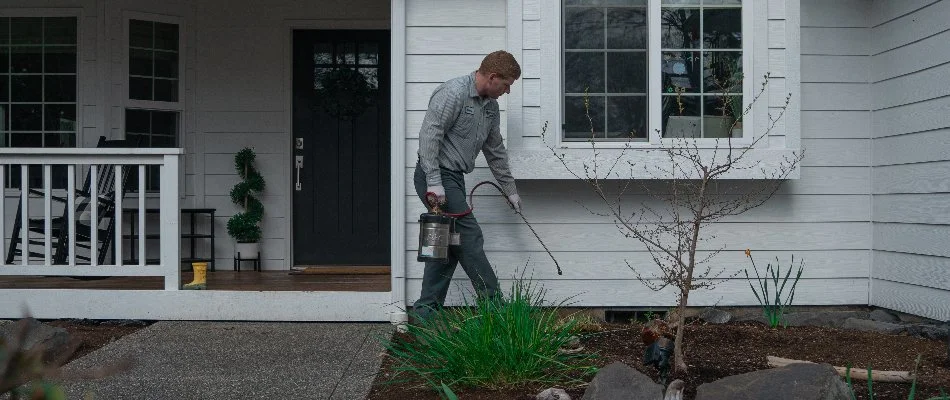
May along the Puget Sound stacks longer evenings, open sliders, and the first week many families actually want to sit outside after dinner. Marine layers lift, porch lights come on earlier, and the yard stops feeling like a winter project. At the same moment, several outdoor pressures show up together: thin ant lines along warm foundation faces, tall grass along fence lines that already reads like summer habitat, damp mulch and splash lines after real showers, and the first mosquito evenings when you stop moving on the patio.
Sunrise Pest and Turf Management has served Western Washington since 1978. Our crews combine cool season turf science with pest routes tuned to marine influenced climates. We maintain an A plus rating with the Better Business Bureau and stay current through the Washington State Pest Management Association. This page is a short quiz, not a diagnosis. It sorts what you are noticing into one sensible next read on sunrisepest.com so you are not scrolling twelve tabs at dusk.
Why May evenings feel crowded with worries
Cool season lawns are awake by late April, yet May is when life moves outdoors in earnest. Kids cut through side yards. Dogs return from county trails with burrs and questions about ticks. Guests notice threshold ants before they notice flowers. None of that means your property is failing. It means the Sound’s shoulder season compresses lawn, perimeter, and biting insect stories into the same calendar week.
Moisture still matters as much as temperature. Downspouts that sheet across walks, splash blocks that shifted, and bark piled against siding hold damp lines ants and other explorers use. If puddles repeat in the same lawn bowl, drainage belongs in the same conversation as color. Our article on standing water and drainage pairs well when insects and turf stress tell the same story.
How to use this quiz honestly
Answer each question the way your yard and entries behave this week, not the way you hope they will behave after a long to do list. Choose one option per question, then click Show my evening priority. Ties favor this order: perimeter care, ants, lawn edge insects, mosquitoes. Your technician may recommend a different mix after walking grade, gutters, and foundation lines on site.
When several issues fire at once, picking one starting point still helps. Perimeter and moisture habits often explain mixed crawling pressure near doors. Steady ant trails deserve their own lane before you chase every small insect by hand. Tall borders and pet paths belong in the lawn edge insect bucket before July evenings fill the calendar. Mosquito pressure is real on still corners, yet open air will never be insect free; the goal is calmer patios, not impossible promises.
Where each result path leads on this site
If your answers lean perimeter, read May exterior walk for sills, gutters, and porches, then review perimeter pest control and pest control services for how we layer visits through the season.
If ants dominate, start with ant control and revisit habits in late April ant trails and exterior habits. Sliders and guest traffic add a May lens in May sliding door track story.
If lawn edges and biting season prep rise to the top, read ticks, tall grass, and yard rhythm, then lawn insect control and lawn care services when you want fertilization, weed work, and insect timing on one calendar.
If mosquitoes are the louder story at dusk, read all you need to know about mosquitoes for local context. Still timing visits? How often to schedule pest and lawn services explains spacing that fits Puget Sound weather.
Evening light, marine layer, and what changes after dinner
Puget Sound evenings cool fast once the sun drops behind the Cascades. That temperature swing matters for ants foraging along warm foundation faces and for mosquitoes finding calm air in corners where furniture blocks breeze. Porch lights that never turn off invite small flies; flies invite spiders. None of that requires panic. It requires noticing which story is loudest at your address this week: moisture and mixed crawlers, steady ant lines, tall borders and pet paths, or biting pressure when you stop moving.
Label timing and product choice belong with a licensed plan. Retail sprays applied in the wrong place often move insects around without solving the route that brought them to the slider. A quiz result is a starting read, not a substitute for inspecting expansion joints, splash lines, and lawn grade on site.
Call (888) 376 9109 or use contact when you want boots on your actual grade, gutters, and foundation instead of a map on a screen.
Choose one answer per question below. Ties favor this order: perimeter care, ants, lawn edge insects, mosquitoes.
After you see your result panel
Each panel below points to articles and service pages that already live on sunrisepest.com. Read the suggested blog first, then open the service page that matches how you want help: one focused visit, a seasonal perimeter program, ant work, lawn insect timing, or a broader pest menu. Bring photos from dusk if you can; downspout outlets and porch lights explain more than a vague note that the patio feels busy.
Use the quiz as a compass, then invite us for a visit when you want measurements, label timing, and entry notes written into a plan you can follow through summer. We have served Tacoma, Seattle, Kitsap, and surrounding communities since 1978. Information here supports your decisions; it does not replace a licensed inspection when safety, damage, or health concerns are uncertain.
Photograph downspout outlets and one porch light at dusk on a calm evening. Those two images often explain more May insect traffic than a shopping cart of random sprays. Pair what you see with the next article the quiz suggests, and you will arrive at your first call with clearer notes than a vague worry that the patio feels busy again.