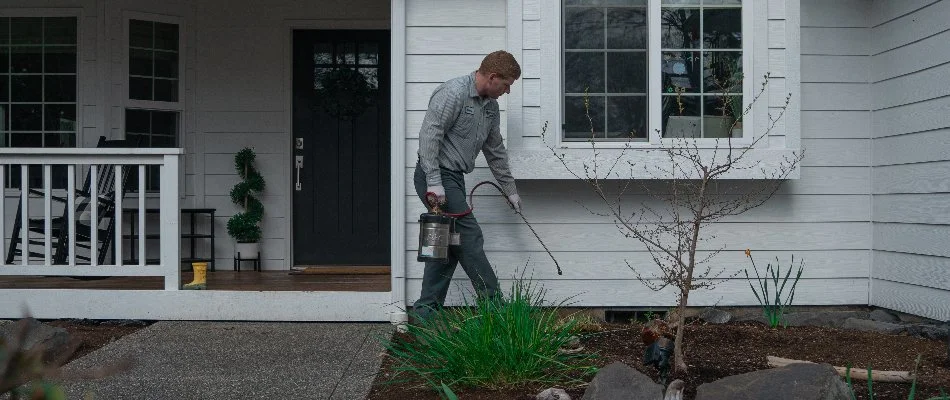
You finished the weekend project in Puyallup with fresh bark piled high against the foundation because it looked neat. Two months later you notice peeling paint low on the wall and small ants wandering indoors near the same corner. That soil line is doing more than decorating the bed. It holds moisture against siding and framing, softens wood over time, and gives ants and other pests a hidden highway into the house.
What the ground line is really doing
Soil, bark, and heavy mulch that touch wood siding or sit above the clear space builders expect trap rain that drips off the roof line and plants. The wall cannot dry evenly. Paint and caulk fail faster. In Western Washington, where rain returns week after week, even a small gap filled with damp material becomes a reliable problem. Pests follow moisture and shelter. Ants explore cracks when the soil outside stays wet. Wood damaged by water draws more interest from pests that chew or nest. Some moisture loving ants are common in our region; learn more on our moisture ants page if you see odd soil piles or damp wood. Termites and other wood damaging pests are a separate urgent category, which is why keeping wood dry is never only about looks. Families in Lakewood and Federal Way often notice the same dull stain line after long wet stretches. When you pull mulch back, look at the lowest course of siding and trim. Early blistering or swelling tells you moisture has been at work longer than the fresh bark suggested. Fixing the bed line first stops the cycle from repeating the moment the next storm arrives.
A simple clearance habit that costs almost nothing
Pull soil and mulch back from the structure. Aim for a few inches of visible foundation or the clearance your builder noted if you have records. You want rain to fall away from the wall, not sit in a fluffy dam. This single habit helps more than most store bought gadgets. Slope beds lightly away from the house. If water runs toward the foundation during a storm, fix grade before you argue about sprays. No treatment replaces moving water to a better path. Trim plants so nothing rests on the siding. Shrubs that brush the wall bridge ants and spiders straight up. Keep a visible air gap. This also reduces mildew on paint in shady Bellevue and Kirkland lots. Fix gutters that dump at the corners. A splash block six feet from the wall beats a waterfall onto the bed line. Pair this with the drainage ideas in standing water and drainage in Western Washington if the yard stays soggy.
When to think about professional perimeter work
If ants keep appearing at the kitchen sink even after you moved mulch and sealed a crack, the nest may be deeper in the structure or soil. That is when perimeter pest control and a broader pest control plan make sense. Technicians treat where pests travel, not only where you see them wander indoors. Suspected wood damage or mud tubes near the foundation should trigger a termite control conversation instead of waiting. Early action in Tacoma, Olympia, or along the Kitsap shoreline limits repair bills and stress.
Beds, vegetables, and realistic compromises
Raised beds should sit clear of siding too. If you garden tight to the house for sun reasons, use a hard edge and keep irrigation from spraying the wall daily. Compost bins tucked against the house share the same moisture problem as deep mulch. Move them a few feet out and keep lids tight so flies and rodents stay uninterested.
Working with Sunrise Pest and Turf Management
We help families across the Puget Sound balance pretty yards with dry walls and fewer pest surprises. After you improve the ground line, many homes still benefit from scheduled visits through programs such as our full service pest control option. Call (888) 376-9109 or use contact to book an inspection if you want a second set of eyes on grade, mulch, and entry points.
Weekend checklist you can repeat each spring
- Pull mulch back until you see clean foundation or specified clearance
- Run a hose lightly and watch flow at each downspout corner
- Cut back branches touching the wall or roof
- Note any soft wood, staining, or soil tubes without poking holes yourself
- Share photos and notes with a pro if anything worries you
Why this topic matters in our climate
Rain here is not a surprise event. It is the default background. That means small mistakes at the soil line repeat every week until someone changes the setup. The good news is that most fixes are simple, visible, and friendly to do it yourself schedules. Save your budget for professional help where the structure, pests, or grading need trained eyes. If you are also tuning the wider property, fold this bed work into getting your yard ready for spring in the Puget Sound so plantings, lawn edges, and pest routes are handled together instead of one annoyance at a time.