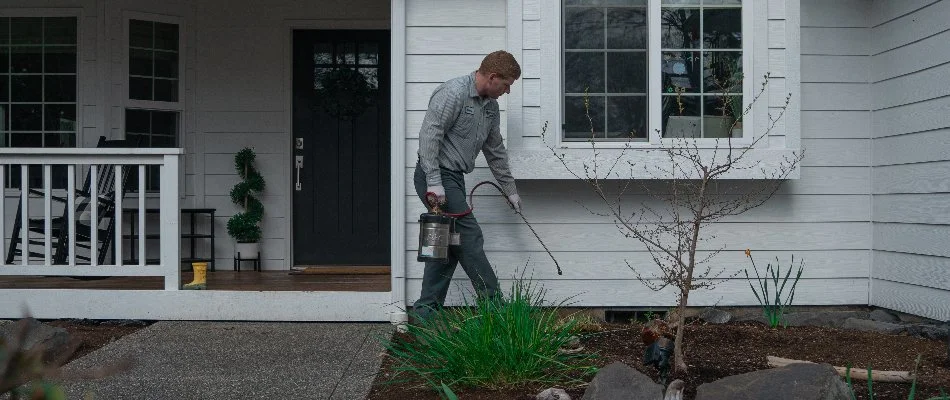
Mid May around Tacoma, Seattle, and Kitsap often delivers the rhythm homeowners remember from early spring, only sharper. A wet week saturates bark bands and splash lines. A short dry block follows, and the south facing foundation face warms enough that scouts test the same expansion joint you wiped down in April. Foundation activity in May is not a single insect story. It is moisture gradients, foot traffic at sliders, and cool season turf bands that still hold winter water while sun faces look dusty.
Why mid May dry spells feel different from April pauses
April dry windows were brief and often ended in evening mist. By mid May, overnight lows stay milder and kitchens see more traffic through open sliders. Soil under mulch can read cool and damp two inches down while the surface beside the downspout looks lighter than it did Monday. Ants and other perimeter explorers respond to that gradient honestly. Scouts that were quiet during a long wet stretch often reorganize along the stem wall once warmth holds for several nights in a row. None of that means the house failed an inspection. It means Puget Sound shoulder season compresses drainage, lawn, and pest stories into the same two week window before guest schedules fill. If puddles were the main worry in early spring, keep standing water and drainage in the same notebook as mid May dry habits. Moisture and insects frequently tell one story from different angles.
Reading foundation activity after the last rain
Walk the stem wall the way a technician would after a dry afternoon, not only after a storm. Note which walls face south or west, where downspouts dump, and whether splash blocks still move water away from siding. Pull mulch back so soil does not touch wood or stucco. A shallow saucer is fine. A volcano that touches the wall is not. Compare what you see with Puget Sound dry spells and foundation pests from earlier in the season, then with late April ant trails and exterior habits when trails look identical but the calendar has moved. Guest season adds another lens in May sliding door track story when crumbs and wet shoes concentrate at thresholds ants already test.
Moisture ants, pavement ants, and mixed perimeter traffic
Moisture ants favor damp wood, failed flashing, and soil that stays soft beside the foundation even when mid yard turf looks fine. A dry spell can hide the problem until you probe mulch or see frass near a bay window. If activity looks tied to rot or chronic damp, professional eyes matter before cosmetic fixes alone. Our page on moisture ants explains inspection and treatment when wood moisture is part of the story. For steady scouts without a rot signal, ant control and perimeter pest control describe how exterior bands and entry zones fit a season long plan. The wider menu lives on pest control services when you want interior follow up coordinated with foundation work.
Lawn bands, moss, and the stripe beside the house
Cool season turf can look uneven near the foundation when splash, shade, and foot traffic disagree. Moss that thrived in a wet April may bronze along the driest stripe while shade strips stay dark green. Read moss and lawn care on Puget Sound wet spring grass when color near the house does not match the open yard. Tall grass along fence lines still behaves like summer habitat before July. Mow those borders on the same rhythm you use for the front stripe, especially if dogs cut through after county trails. When you want fertilization, weed work, and insect timing on one calendar, lawn care services keeps turf aligned with perimeter visits instead of three separate reminders.
Porches, gutters, and the wider exterior pass
Dry mid May weeks are when homeowners reset gutter screens and paint trim. They are also when spider silk returns under eaves that stayed quiet in the rain. Pair foundation notes with May exterior walk for sills, gutters, and porches when you want a whole house rhythm before guests arrive. Dim unnecessary porch bulbs where safety allows. Move pots off damp pavement beside entries. Knock down obvious webbing only where it is safe between professional visits. Those habits support any program you book without promising zero insects indoors or out.
Scheduling before routes tighten
Crew routes tighten as outdoor living season fills in. Calling in mid May usually gives you cleaner options than waiting until everyone remembers their patio at once. Use contact or call (888) 376 9109 when you want dry spell notes turned into a written plan with foundation priorities and entry photos. Bring two images if you can: one sun facing foundation corner in afternoon light and one downspout outlet after the last rain. Those two photos often explain more spring traffic than a vague worry that ants returned when the weather turned nice.
How Sunrise fits the Sound
Sunrise Pest and Turf Management has served Western Washington since 1978. We combine cool season turf science with pest routes tuned to marine influenced climates. We maintain an A plus rating with the Better Business Bureau and stay current through the Washington State Pest Management Association. Information here supports your walk. It does not replace a licensed inspection when safety, damage, or health concerns are uncertain. Mid May dry spells between spring rains are ordinary on the Puget Sound. Honest mulch depth, splash discipline, and perimeter timing turn an ordinary week into calmer foundation activity.
One habit to try after the next dry afternoon
Walk the sunniest foundation face with a screwdriver handle and probe mulch depth beside the downspout. Note whether soil under the surface is still cool and damp while the top looks dry. Write the date beside your observation. That single comparison usually teaches more than switching retail sprays every weekend when scouts reappear along the same expansion joint. If several worries fire at once, use our May evening bite priority quiz to land on one sensible next read before you call for a visit.